

01
Every repository invents its own way of working.
Different CI/CD, release and configuration patterns for problems that should be solved once. Each team ends up maintaining its own solutions, and shared improvements take longer to reach everyone.
Firestartr is an open-source framework for building internal developer platforms. It connects domains, systems, components, teams and infrastructure so your platform can create, deploy and evolve software with clear rules.
Firestartr starts by making your software visible. Then it turns that knowledge into repeatable, reviewable automation.
Different CI/CD, release and configuration patterns for problems that should be solved once. Each team ends up maintaining its own solutions, and shared improvements take longer to reach everyone.
Systems and dependencies exist, but nobody shares a clear view of how they fit together. Without that map, understanding the impact of a change or who it affects means rebuilding the context every time.
When ownership, permissions and infrastructure live apart, operating becomes slow and risky. Decisions get stuck, and resolving an incident can start with figuring out who should act.
Firestartr organizes software around the same boundaries the business recognizes. Each level gives context to the next.
Group the systems serving one part of the business.
Define functional boundaries with clear responsibility.
Connect a software unit to its repository.
Make ownership of every component visible.
Add reusable capabilities to a repository.
Keep supporting resources beside the software using them.
Review changes in GitHub, explore and provision through Firestartr Portal, or request operations in plain language with Firestartr skills.
Repositories, pull requests and workflows apply approved changes.
Browse components, find ownership and manage resources through guided flows.
Describe what you need; an agent interprets the context and prepares the right operation.
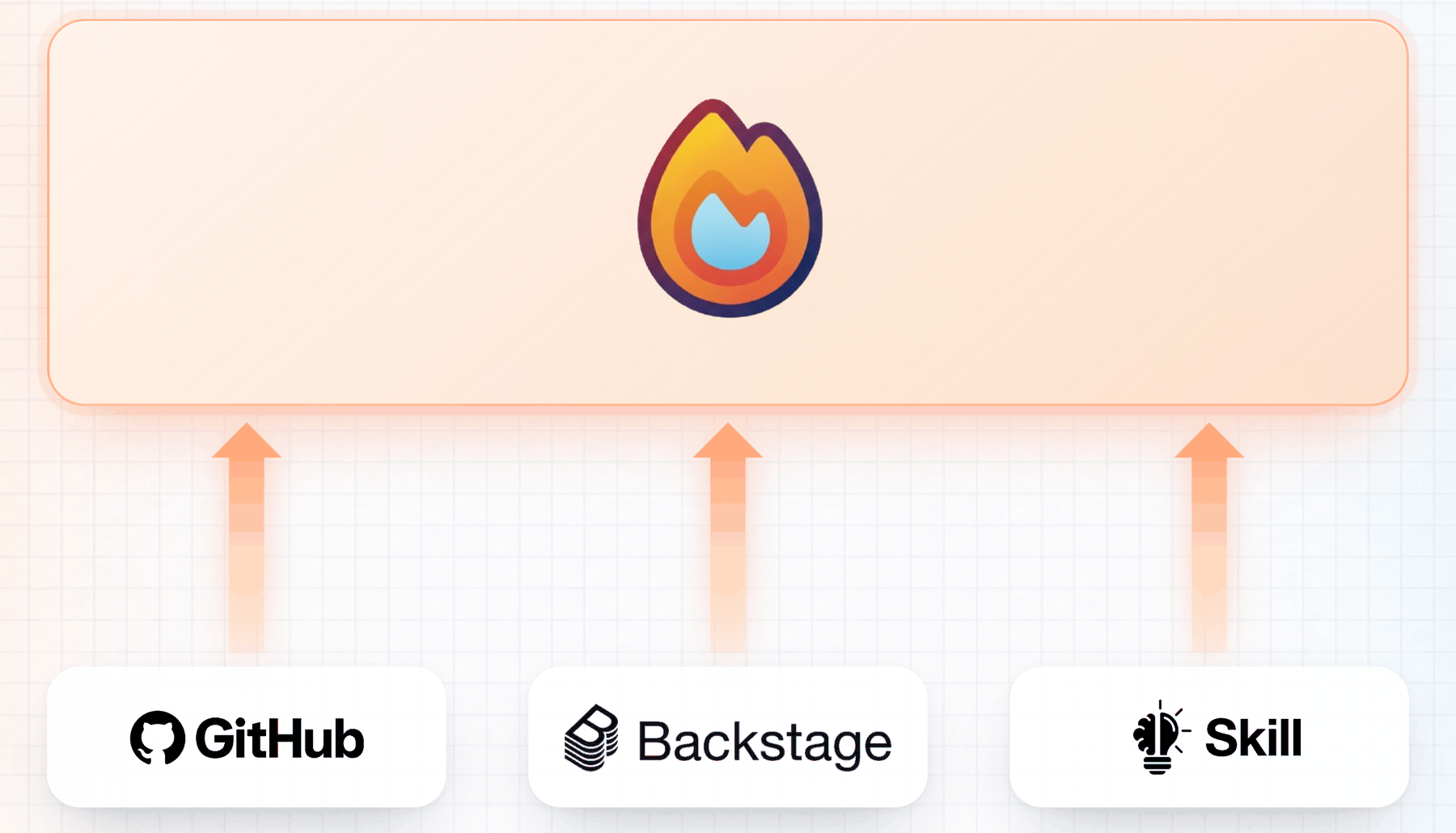
Give your agents room to work while keeping each change grounded in how your organization is structured.
Context and rules turn a request into an operation
See how a Prefapp skill asks for missing details, prepares a plan and opens a pull request to create a repository with release_please.
Each stage makes clear what was requested, which rules were checked and where your team reviews the outcome before it is applied.
Describe the change your team needs.
Place the change in your organization’s context.
Check permissions and rules before proposing changes.
Your team reviews and approves before applying.
The approved state reaches your platform.
Choose Features—reusable capabilities—from the catalog and compose them into each component. Their files, workflows and configuration are ready to integrate, review and evolve without starting from scratch.